Advanced lithium ion battery assembly line Solutions for Nigeria's Energy Transition

Empowering Nigeria's industrialization with high-precision battery manufacturing technology and sustainable energy infrastructure.

Advanced lithium ion battery assembly line Solutions for Nigeria's Energy Transition

Integrating world-class automation with local energy needs to build a resilient power ecosystem in Nigeria.

The Landscape of Battery Manufacturing in Nigeria

Analyzing the intersection of energy scarcity and industrial potential in West Africa.

Nigeria faces a critical energy gap, where unstable grid power drives a massive demand for independent energy storage. The local market is transitioning from basic lead-acid batteries to sophisticated lithium-based systems. To ensure durability in Nigeria's humid and hot climate, components like a high-quality rubber seal strip are essential to prevent moisture ingress in battery enclosures.

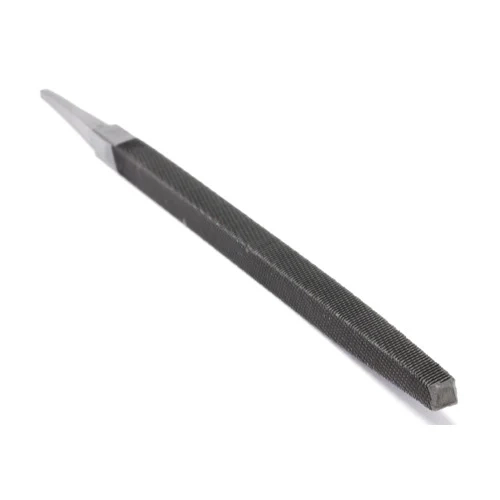
Current manufacturing efforts are shifting from simple importation to local assembly. This shift requires precision tools, including professional steel files for manual finishing and mold adjustment during the early stages of production line setup, enabling local technicians to refine equipment on-site.

Furthermore, the logistics of raw material transport in Nigeria often rely on traditional packaging. Many components are still shipped in heavy-duty jute bags to protect against dust and mechanical impact during transit from the ports of Lagos to inland industrial hubs.
Evolution of Energy Storage Production

From basic power backup to intelligent lithium-ion manufacturing.

Market Development History

Prior to 2010, Nigeria's energy storage market was dominated by imported deep-cycle lead-acid batteries. These systems were bulky and suffered from short lifespans due to high ambient temperatures and frequent deep discharge cycles.

Between 2015 and 2022, the "Solar Boom" introduced small-scale lithium-ion imports. This period saw the rise of localized pack assembly, where technicians began importing cells and assembling them into custom arrays for residential and commercial use.

From 2023 onwards, the focus has shifted toward full-scale industrialization. The introduction of a complete lithium ion battery assembly line allows Nigerian firms to control quality from cell sorting to final testing, reducing dependence on finished imports.

Future Development Trends

AI-Driven Quality Control

Integration of machine learning algorithms to predict cell degradation and optimize the assembly process for higher energy density.

LFP Chemistry Dominance

A shift toward Lithium Iron Phosphate (LFP) due to its superior thermal stability, which is critical for the Nigerian climate.

Circular Economy Integration

Development of local recycling plants to recover cobalt and lithium from spent batteries, creating a closed-loop supply chain.

Industrial Outlook & Technological Projections

Scaling energy independence through advanced manufacturing.

Modular Production Scaling
Implementing scalable lines that can grow from 10MWh to 1GWh capacity as Nigerian demand increases.
Thermal Management Systems
Integrating advanced liquid cooling to maintain battery efficiency in Nigeria's tropical heat.
BMS Intelligence
Developing Battery Management Systems tailored for erratic power inputs typical of local grids.
Green Supply Chains
Reducing the carbon footprint of assembly lines through solar-powered factory operations.

Industry Outlook

Based on Google search trends in the region, there is a surge in queries regarding "off-grid energy storage" and "industrial lithium assembly." This indicates a strong market pull toward decentralized power solutions that can support Nigerian SMEs.

We expect the next 3-5 years to see a convergence of battery manufacturing and EV infrastructure, where the same assembly lines produce both stationary storage and traction batteries for electric motorcycles in Lagos and Abuja.

Localized Application Scenarios in Nigeria

Applying lithium technology to solve real-world Nigerian challenges.

01. Solar Mini-Grids for Rural Communities

Deploying high-capacity batteries assembled on a local line to power remote villages, ensuring stable electricity for healthcare and education without grid reliance.

02. Industrial Backup for Manufacturing Plants

Replacing diesel generators with large-scale LFP storage systems to eliminate noise pollution and reduce operational costs in industrial zones.

03. E-Mobility Transition for Urban Logistics

Providing battery packs for electric delivery trikes, utilizing precision components and ensuring safety through rigorous local testing.

04. Telecom Tower Power Stabilization

Implementing lithium storage for 4G/5G towers across Nigeria to ensure uninterrupted connectivity despite volatile power supply.

05. Agricultural Cold-Chain Storage

Powering refrigerated warehouses with sustainable battery arrays to reduce post-harvest losses for Nigerian farmers.

Brand Story

Global Development History of Xingtai Shuoding Trading Co., Ltd.

The Foundation of Precision

Started with a commitment to industrial excellence, providing high-precision hardware tools to global manufacturers.

Diversification into Automation

Expanded our portfolio to include complex assembly systems, focusing on the emerging energy storage sector.

The Africa Expansion Initiative

Identified the critical energy needs of Nigeria and tailored our assembly lines for robustness and local adaptability.

Innovation in Material Science

Integrating specialized seals and protective packaging to ensure equipment longevity in extreme climates.

Vision for a Greener Future

Our mission is to democratize energy access in Nigeria by providing the tools for local, sustainable battery production.

Frequently Asked Questions for the Nigerian Market

Expert answers to common implementation challenges.

How do I set up a lithium ion battery assembly line in Lagos?

Setting up requires a climate-controlled facility, a stable power input (preferably solar-hybrid), and certified technicians. We provide a turnkey solution including machinery, installation, and staff training.

What is the importance of a rubber seal strip in battery casings?

In Nigeria's high-humidity environment, a high-quality seal prevents moisture and dust from entering the battery pack, which is critical to avoid internal short circuits and corrosion.

Can I use steel files for maintaining battery assembly equipment?

Yes, professional-grade files are essential for precision adjustments and removing burrs from custom metal housings during the prototype phase of production.

Why are some components shipped in jute bags?

Jute bags provide breathable, durable, and cost-effective protection for non-sensitive bulk components, reducing plastic waste while protecting goods during long-haul transport.

Do you provide accessories like pet snacks in your commercial shipments?

While our core focus is industrial machinery, we maintain diverse trading channels that include various consumer goods like pet snacks to support our clients' diverse import needs.

What is the average ROI for a local battery assembly plant in Nigeria?

Depending on the scale and target market (residential vs. industrial), most plants see a return on investment within 24 to 36 months due to the high local demand for energy storage.

Ready to Industrialize Your Energy Future?

Contact our experts today to deploy world-class battery manufacturing technology in Nigeria.

Contact Us Now

If you are interested in our products, you can choose to leave your information here, and we will be in touch with you shortly.